
A Material Showdown for Architectural Entrances: Bronze, Stainless Steel, Aluminum, and Wood
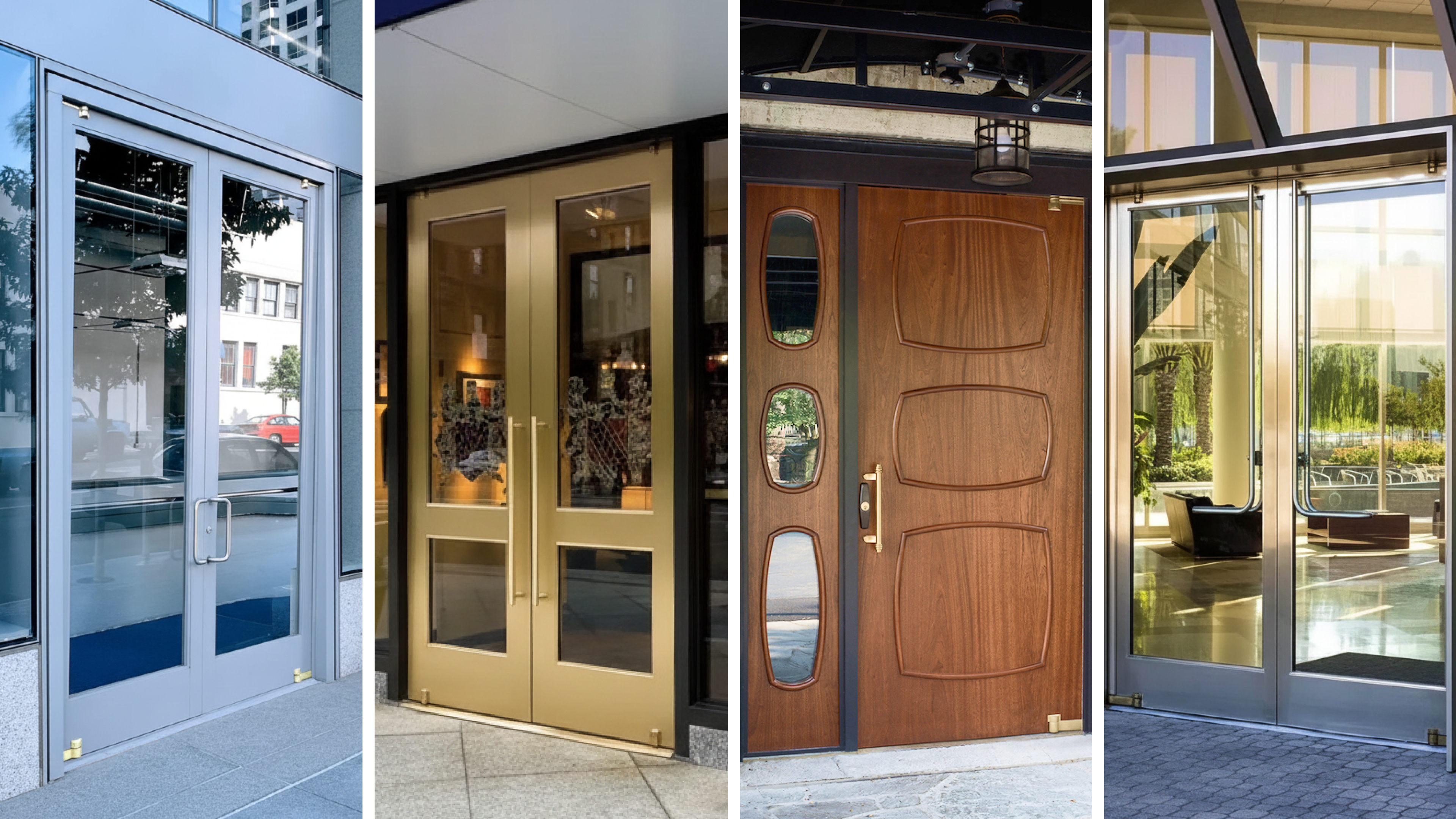
The entrance to a building is more than a set of doors; it’s the first impression, a defining statement of style, and often a reflection of the story behind the architecture. In fact, studies suggest people form an impression of a building within seven seconds of seeing its entrance, making material choices not just aesthetic, but psychological.
Whether you’re designing a grand commercial lobby, building for long-lasting performance in high-traffic areas, or creating clean, modern lines for multi-family properties, understanding the strengths and trade-offs of these materials is essential.
Beyond durability, entrances are about experience. The way a door moves, the feel of a handle, and the sound it makes when it closes are all of the sensory details that shape how a space is perceived. By breaking down the characteristics, benefits, and trade-offs of today’s top materials, architects, designers, and builders gain the insight they need to create entrances that are both visually striking and built to last.
Materials at a Glance
Bronze has played a role in architecture for more than 4,000 years, appearing in everything from ancient temple doors to contemporary luxury entrances. It is a copper-based alloy known and valued for its density, richness, and warmth. Over time, it naturally develops a patina, giving each installation a distinctive, evolving character – one reason it remains a favorite for custom-crafted, high-end applications.
Stainless steel, an iron-based alloy enriched with chromium, is prized for its exceptional strength, corrosion resistance, and clean, modern appearance. These qualities make it a go-to choice in high-traffic or demanding environments.
Aluminum, by contrast, is a lightweight and naturally corrosion-resistant metal that offers flexibility in fabrication and is widely used in contemporary storefronts, curtain walls, and glazed entrance systems.
Together, these three materials represent distinct approaches to durability, aesthetics, and structural performance, which is why they remain top considerations for architects and designers specifying entrance systems.
Choosing the Right Material for Your Entrance
Choosing the right material for an architectural entrance depends not only on aesthetics and performance but also on the context in which it will be used. Each material – bronze, stainless steel, and aluminum – has its own strengths that make them particularly well-suited to certain environments and architectural goals.
Bronze: Bronze conveys elegance, prestige, and history. Its warm tones and natural patina make it ideal for historical buildings, institutional structures, and luxury multifamily residences. Bronze doors and hardware serve as statement pieces, offering both visual impact and long-lasting durability. However, they are heavier and more expensive than other options. Bronze excels in high-touch environments thanks to its natural wear resistance and the protective patina it forms over time.
Stainless Steel: Stainless steel is valued for its structural strength and resistance to corrosion, making it a dependable choice for high-traffic commercial entrances. Its stable finish holds up well in demanding or coastal environments where moisture, salt, and frequent contact are ongoing concerns. Visually, stainless steel supports clean, modern designs, offering a refined yet industrial presence that prioritizes longevity and consistency over expressive aging.
Aluminum: Aluminum’s low weight and high formability make it especially well-suited for contemporary entrance systems that emphasize clean lines and expansive glazing. Its strength-to-weight ratio supports larger door panels, slimmer profiles, and integrated glass without placing excessive demands on framing or hardware. Naturally corrosion-resistant and available in a wide range of finishes, aluminum offers long-term performance while enabling the design flexibility required for modern architectural expressions.
Wood (Bonus!): Wood delivers a natural aesthetic that brings warmth and authenticity to an entrance. Commercial entries can be made from a variety of species, including American Black Walnut, Teak, American Black Cherry, Rift White Oak, and Plain Sawn Mahogany — each offering distinct grain and tone. When properly engineered and protected with a factory-applied natural gloss finish, wood performs well, provides a timeless, handcrafted look, and contrasts beautifully with metal systems.
Designing Entrances That Inspire and Endure
Selecting the right material for an architectural entrance is more than a design decision – it’s an investment in both form and function. Bronze, stainless steel, and aluminum each offer unique advantages that shape durability, maintenance expectations, and the character of the entrance itself.
When designers understand how these materials behave, age, and interact with their environment, the entrance becomes more than a point of access. It becomes an architectural statement performance, and sensory experience, and leaves a lasting impression on everyone who passes through. – one that balances beauty,
AIA Continuing Education
Receive 1 AIA CES HSW/SD credit hour through our new online course.